
Free questions and answers
Practise road rules, signs and vehicle controls with explained answers.
Original study questions written for this website. They are not official examination questions or a paid mock test.
Rules of the road
1. Rain begins while you follow a car. How should your following gap change?
- Make it smaller
- Make it larger
- Copy the car’s speed exactly
Answer key: Make it larger
Explanation
Rain can reduce grip and visibility. Extra space gives more time to observe and slow down safely.
Read the lesson2. A bend hides oncoming traffic. Overtaking would take you into its lane. What should you do?
- Pass after sounding the horn
- Cross the centre quickly
- Wait for a safe, clear view
Answer key: Wait for a safe, clear view
Explanation
Do not enter the opposing lane when the view is too restricted for a safe pass. A horn does not remove that danger.
Read the lesson4. An ambulance approaches with its siren and emergency lights operating. What is the safe response?
- Accelerate to stay ahead
- Make space predictably and safely
- Follow it through the gap
Answer key: Make space predictably and safely
Explanation
Give the emergency vehicle right of way. Check around you before making space so that your movement does not create another danger.
Read the lesson5. You need to read a message while driving. What should you do?
- Hold the phone below the window
- Hold it between shoulder and ear
- Park lawfully and safely before using it
Answer key: Park lawfully and safely before using it
Explanation
Do not drive while holding the phone with a hand or another body part. Attend to the message after parking safely.
Read the lesson6. You cannot establish whether the path behind is clear. What should you do before reversing?
- Stop and check the path
- Rely only on one mirror
- Reverse faster to finish sooner
Answer key: Stop and check the path
Explanation
Reverse only when it is safe. Establish a clear path and continue observing throughout the movement.
Read the lesson7. A secured load blocks your required view to one side. What must change before driving?
- Add a red flag
- Reposition the load to restore the view
- Switch on hazard lights
Answer key: Reposition the load to restore the view
Explanation
Secure fastening alone is insufficient. The load must also leave the required front, side and rearward views clear.
Read the lesson8. You indicate to change lanes, but a motorcycle is alongside. What should you do?
- Move because the indicator gives priority
- Squeeze across slowly
- Wait until the movement is safe
Answer key: Wait until the movement is safe
Explanation
An indicator communicates intention, not priority. Check the surrounding traffic and change lanes without obstructing or endangering others.
Read the lesson9. Petrol is about to be delivered into your vehicle’s tank. What should you do with the engine?
- Switch it off
- Leave it running if you stand outside
- Leave it idling with hazard lights on
Answer key: Switch it off
Explanation
The engine must not run while petrol or another flammable fuel is delivered into the tank. Hazard lights do not change that requirement.
Read the lesson10. On an ordinary motorcycle requiring a helmet, the rider leaves the chin strap loose. What is needed?
- Nothing on a short trip
- Fasten the strap properly under the chin
- Fasten it only when carrying a passenger
Answer key: Fasten the strap properly under the chin
Explanation
A suitable helmet must fit properly and have its chin strap fastened. Merely resting it on the head is insufficient.
Read the lesson11. Your vehicle contributes to a collision causing damage, but has no visible damage itself. What must you do?
- Leave because your vehicle looks undamaged
- Leave if the other driver caused it
- Stop and establish the injuries and damage
Answer key: Stop and establish the injuries and damage
Explanation
The duty to stop applies when you are involved in or contribute to the collision. It does not depend on damage to your own vehicle.
Read the lessonSigns, signals & markings
1. A stop line is marked on the road. This stop sign controls your approach and the junction looks empty. What is required?
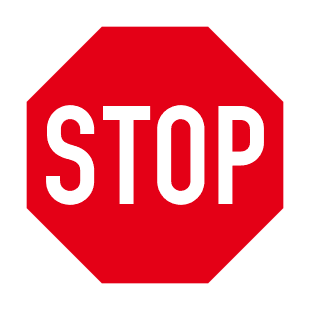
- Stop fully behind the stop line
- Slow down without stopping
- Stop only if another vehicle appears
Answer key: Stop fully behind the stop line
Explanation
The stop requirement applies even when no traffic is visible. After stopping, proceed only when it is safe.
Read the lesson2. Cross traffic is close enough to pose a hazard at this yield sign. What should you do?
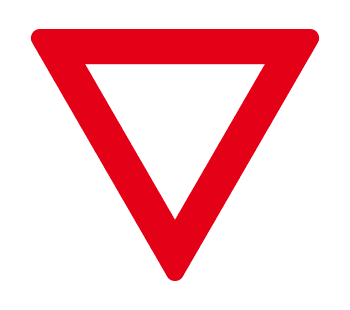
- Enter and expect it to brake
- Yield, stopping if necessary
- Park permanently at the sign
Answer key: Yield, stopping if necessary
Explanation
Give way to the conflicting traffic. Reduce speed and stop if that is needed to let it pass safely.
Read the lesson3. A useful shortcut begins beyond this no-entry sign. What is permitted?
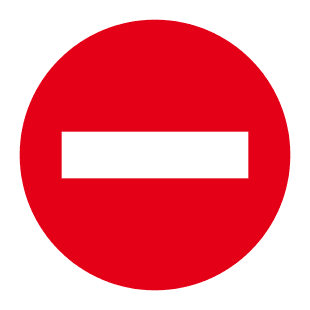
- Enter if you follow another car
- Enter by reversing
- Do not enter past the sign
Answer key: Do not enter past the sign
Explanation
The sign prohibits entry to that road, carriageway or lane. A convenient route or another driver’s action does not provide permission.
Read the lesson4. What does the number on this round speed-limit sign specify?
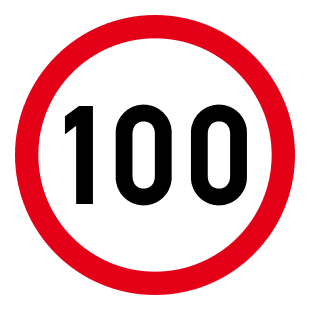
- The maximum speed in km/h
- The minimum speed in km/h
- The distance remaining in kilometres
Answer key: The maximum speed in km/h
Explanation
This is an upper speed limit from the sign. Conditions may require a lower speed; the number is not a target.
Read the lesson5. This keep-left sign is displayed at an obstruction. Which route must you take?

- Either side if it looks clear
- Pass to the left of the obstruction
- Turn left at the next intersection
Answer key: Pass to the left of the obstruction
Explanation
The arrow directs the side on which you must pass the obstruction. It is not a warning about a later turn.
Read the lesson6. You missed your destination and see this sign. May you turn to face the opposite direction here?
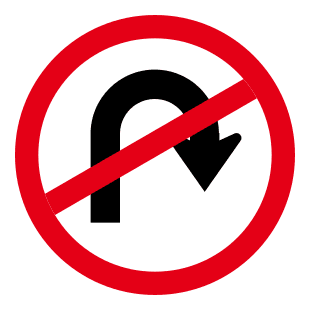
- Yes, if the road is wide
- Only buses are prohibited
- No, a U-turn is prohibited
Answer key: No, a U-turn is prohibited
Explanation
The sign prohibits turning the vehicle around to face the opposite direction. Find another lawful route.
Read the lesson7. This no-stopping sign applies where you want to wait for a friend. What should you do?
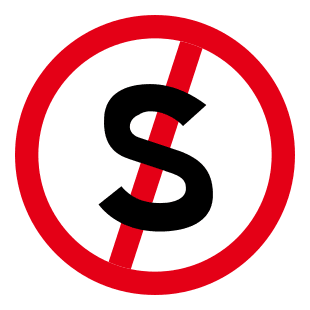
- Find a lawful stopping place elsewhere
- Wait with hazard lights on
- Wait if it takes less than a minute
Answer key: Find a lawful stopping place elsewhere
Explanation
Voluntary waiting is not allowed where stopping is prohibited. Hazard lights or a short duration do not grant permission.
Read the lesson8. You reach this warning sign before the actual stop sign. What does it tell you?
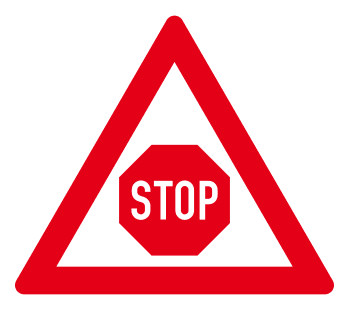
- Stop exactly at this warning sign
- Prepare for a stop control ahead
- Accelerate before the junction
Answer key: Prepare for a stop control ahead
Explanation
It warns of a stop sign ahead that may be difficult to see in time. Prepare to stop at the actual stop control.
Read the lesson9. What risk should you prepare for after this children warning sign?
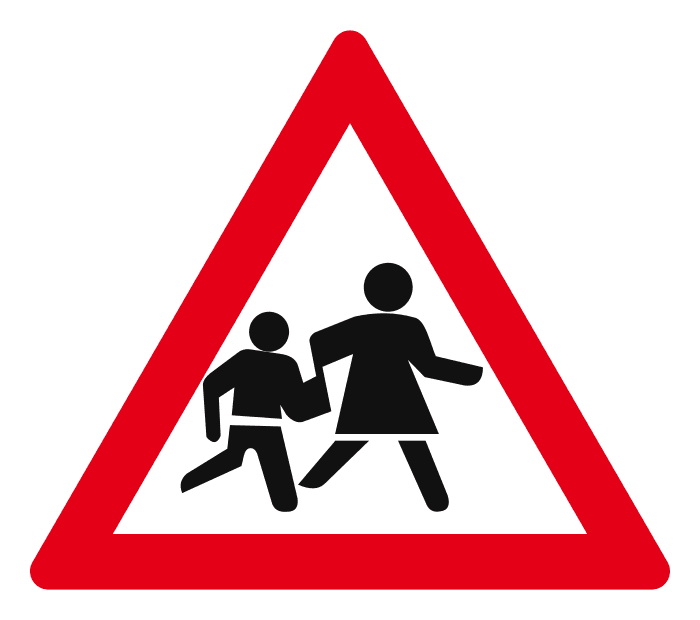
- Only school vehicles may use the road
- Children must always wait for cars
- Children may cross the road ahead
Answer key: Children may cross the road ahead
Explanation
Look out for children and be ready to slow or stop safely. The sign warns of a risk, not an exclusive vehicle lane.
Read the lesson10. This sign warns of a slippery road ahead. What is a sensible response?
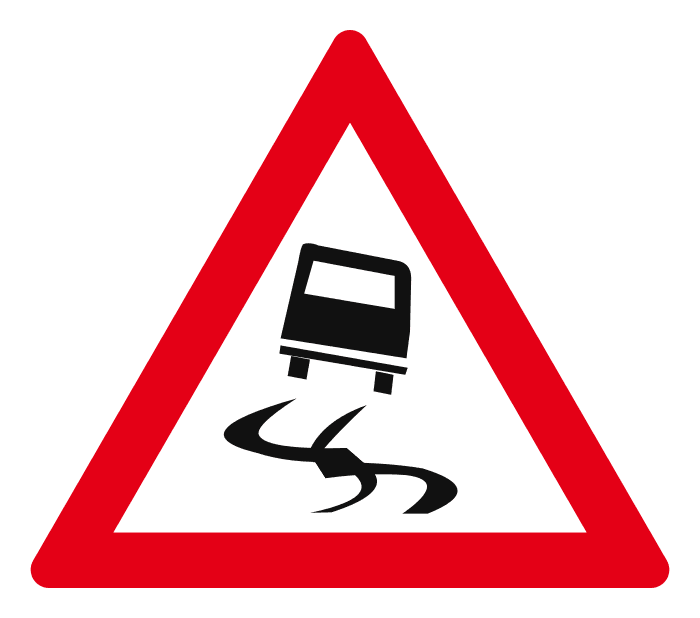
- Ease speed and use smooth control inputs
- Brake sharply when you reach it
- Reduce your following gap
Answer key: Ease speed and use smooth control inputs
Explanation
Reduced grip calls for caution and extra space. Abrupt braking or steering can make control more difficult.
Read the lesson11. A red cross is displayed above your intended lane. What does it mean?
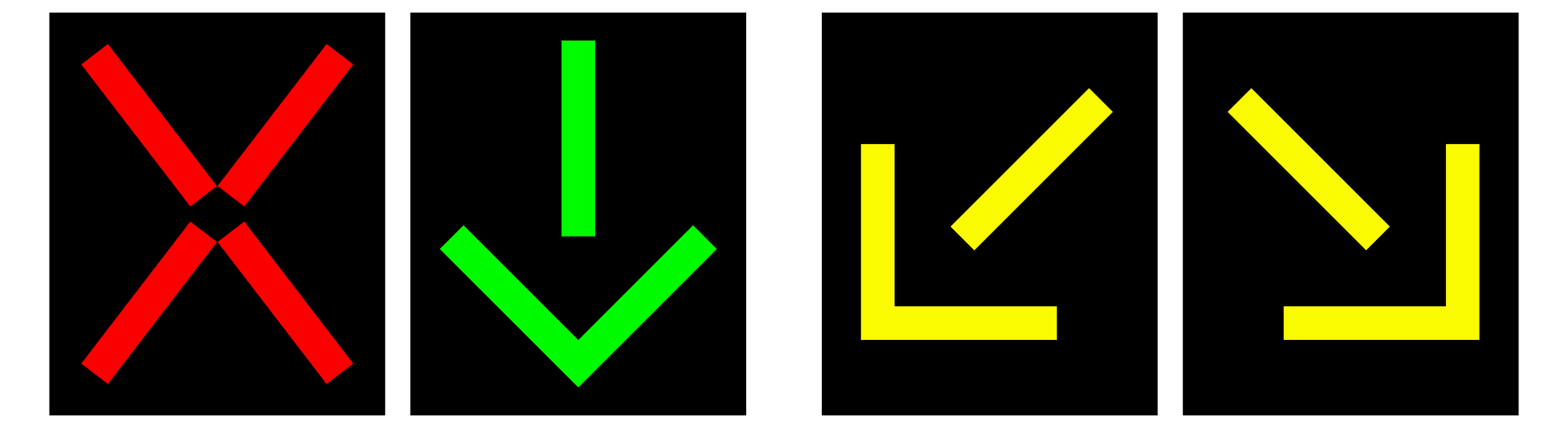
- The lane is open to all traffic
- The lane is closed to use
- The lane is reserved for buses
Answer key: The lane is closed to use
Explanation
The red cross prohibits using the lane below it. A green downward arrow indicates an available lane instead.
Read the lessonVehicle controls
1. On the illustrated geared motorcycle, which brake is operated by a foot?
Applies to Code 1
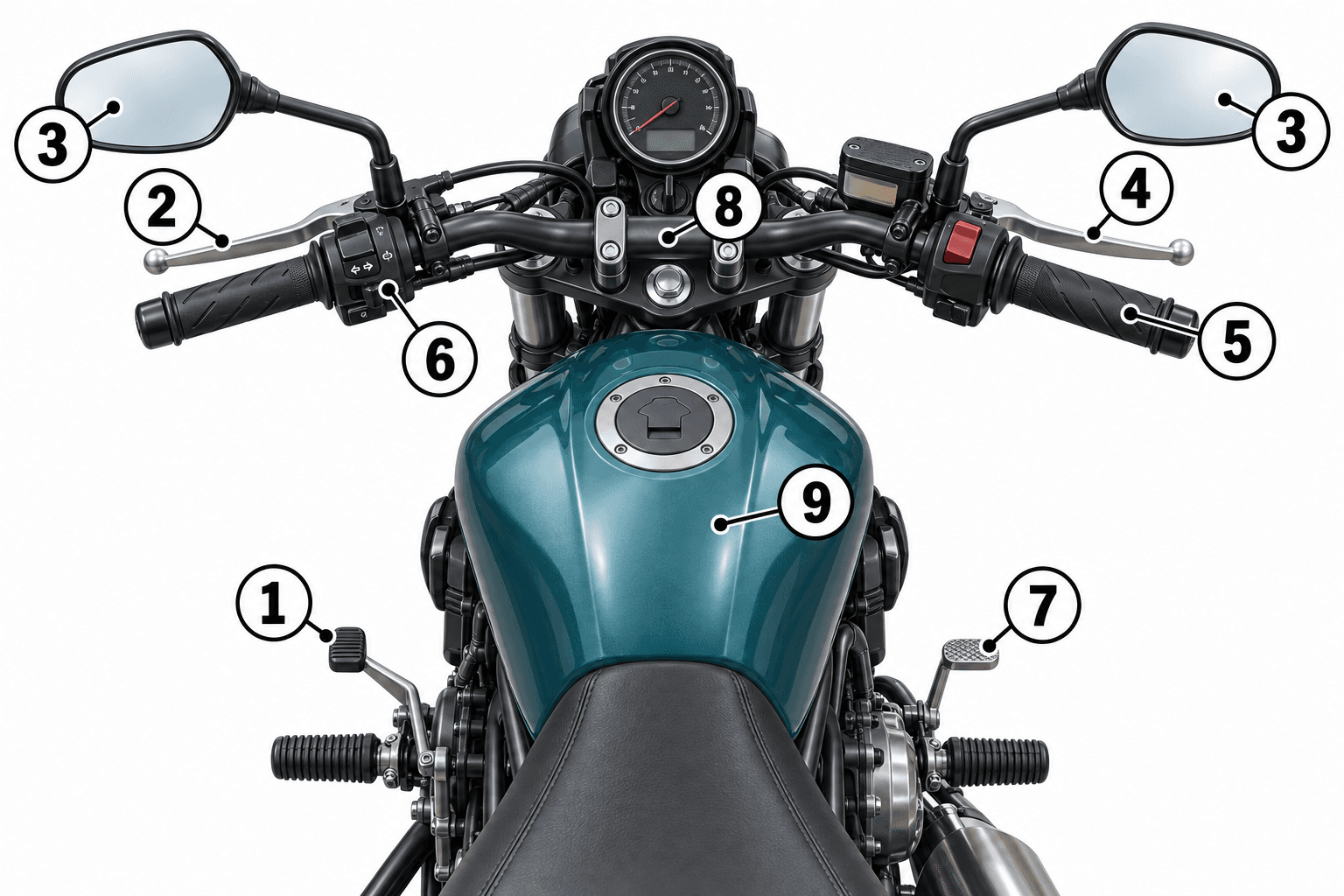
- The front brake
- The clutch
- The rear brake
Answer key: The rear brake
Explanation
The pictured rear brake is foot-operated. The front brake uses a hand lever; the footrest is a different component.
Read the lesson2. Which control is the left-hand lever on the illustrated geared motorcycle?
Applies to Code 1
- The clutch
- The throttle
- The front brake
Answer key: The clutch
Explanation
The illustrated clutch lever is on the rider’s left. The throttle and front-brake lever are on the right.
Read the lesson3. Which pair is operated by the right hand on this illustrated motorcycle?
Applies to Code 1
- Clutch and gear lever
- Throttle and front brake
- Rear brake and mirror
Answer key: Throttle and front brake
Explanation
The right grip controls the throttle and the right lever operates the front brake. This question refers to the pictured geared layout.
Read the lesson4. In the illustrated manual light vehicle, what does the middle pedal operate?
Applies to Code 2
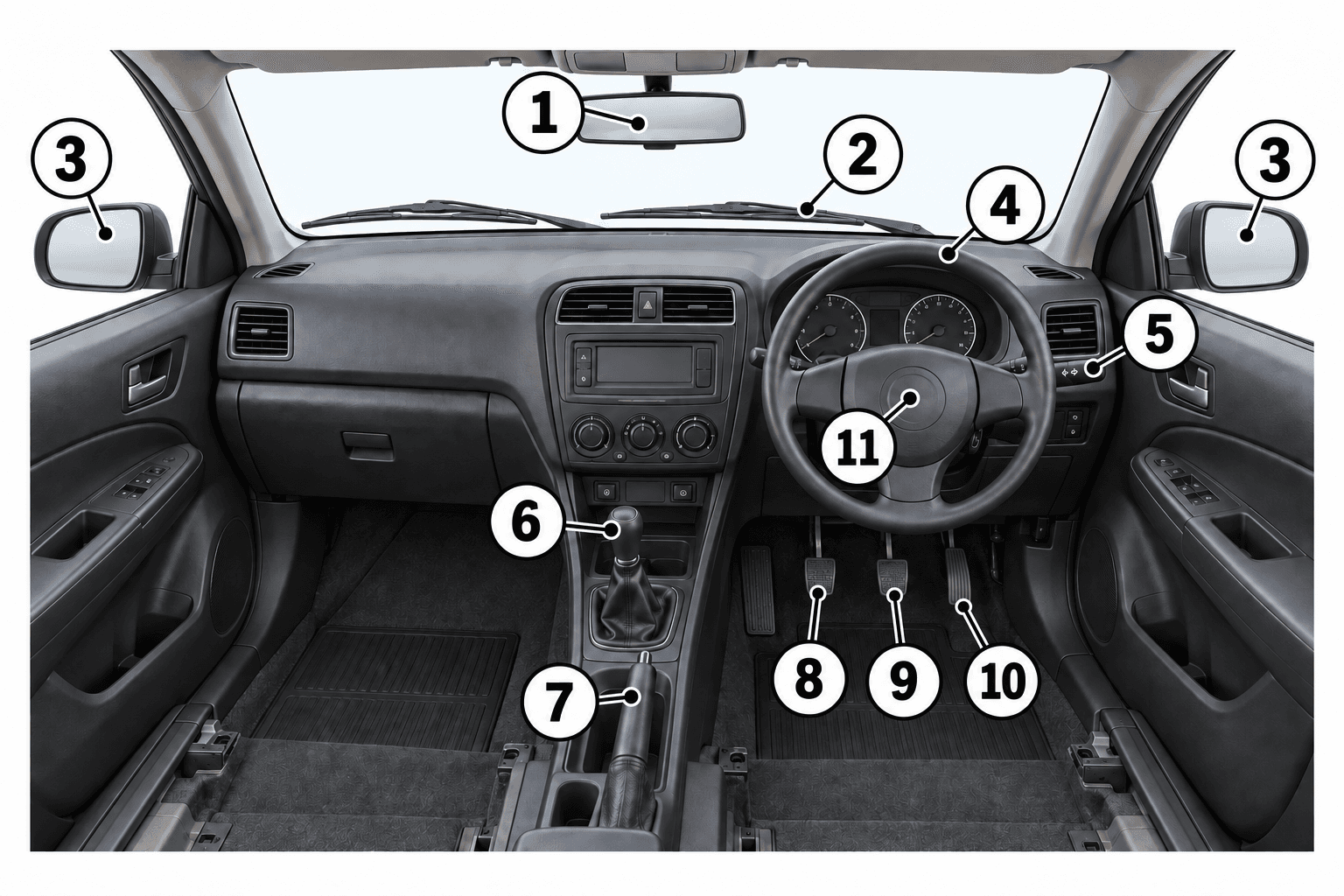
- The clutch
- The accelerator
- The service brake
Answer key: The service brake
Explanation
The manual layout has clutch, brake and accelerator from left to right. Identify the brake separately from the other pedals.
Read the lesson5. Which control is intended to secure the pictured light vehicle when parked?
Applies to Code 2
- The parking brake
- The wiper control
- The horn
Answer key: The parking brake
Explanation
The parking brake secures a stationary vehicle. Its physical control can vary between models; it is not always a hand lever.
Read the lesson6. Rain is obscuring the windscreen. Which labelled light-vehicle control clears its outside surface?
Applies to Code 2
- The indicator switch
- The wiper control
- The gear lever
Answer key: The wiper control
Explanation
Wipers clear the windscreen’s outside surface. Indicators signal direction, and the gear lever selects a transmission setting.
Read the lesson7. Which pedal is absent from the illustrated automatic light-vehicle layout?
Applies to Code 2
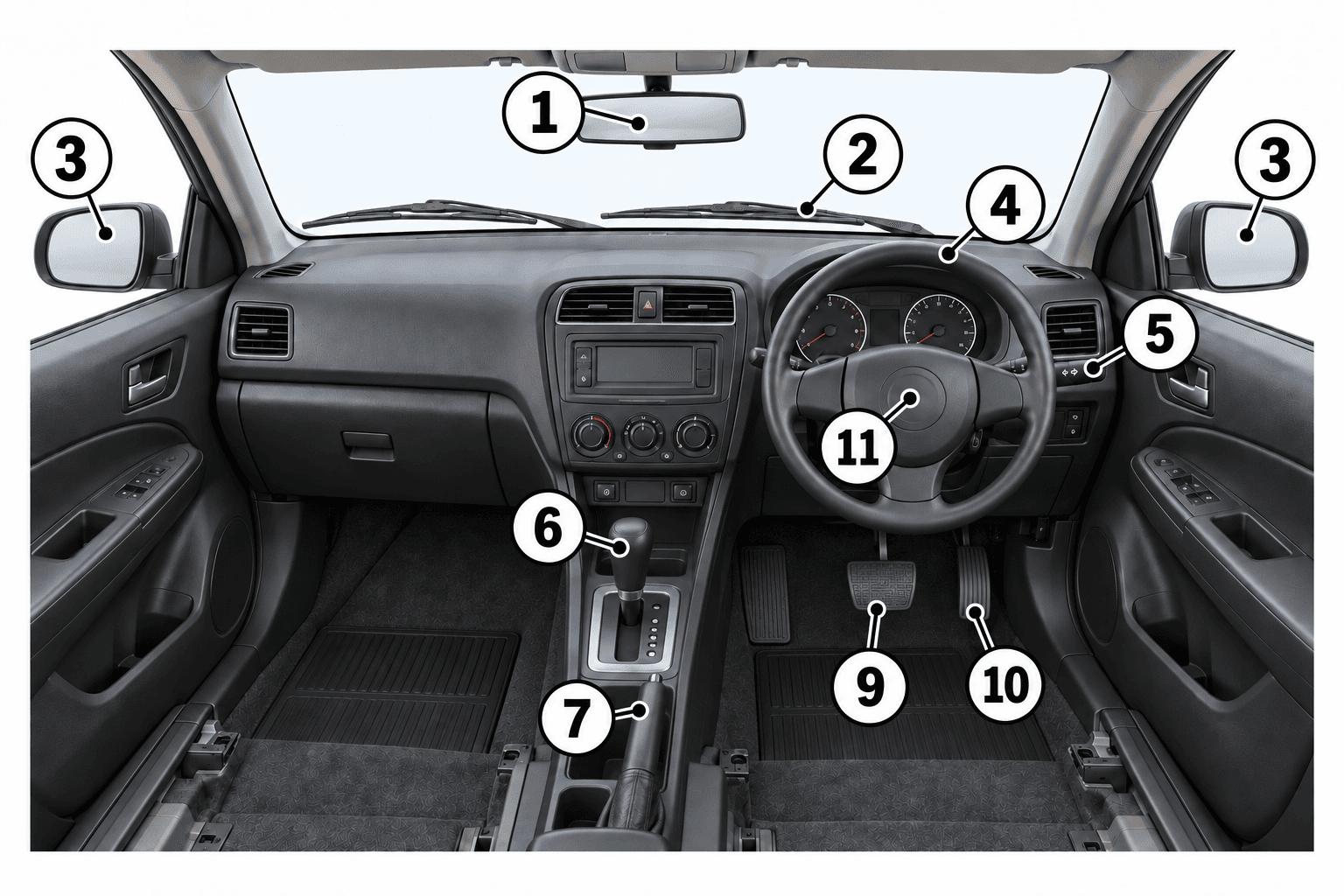
- The service-brake pedal
- The accelerator pedal
- The clutch pedal
Answer key: The clutch pedal
Explanation
This automatic layout has brake and accelerator pedals without a clutch pedal. Learn the fitted controls before operating another vehicle.
Read the lesson8. Which control changes direction in the illustrated heavy vehicle?
Applies to Code 3
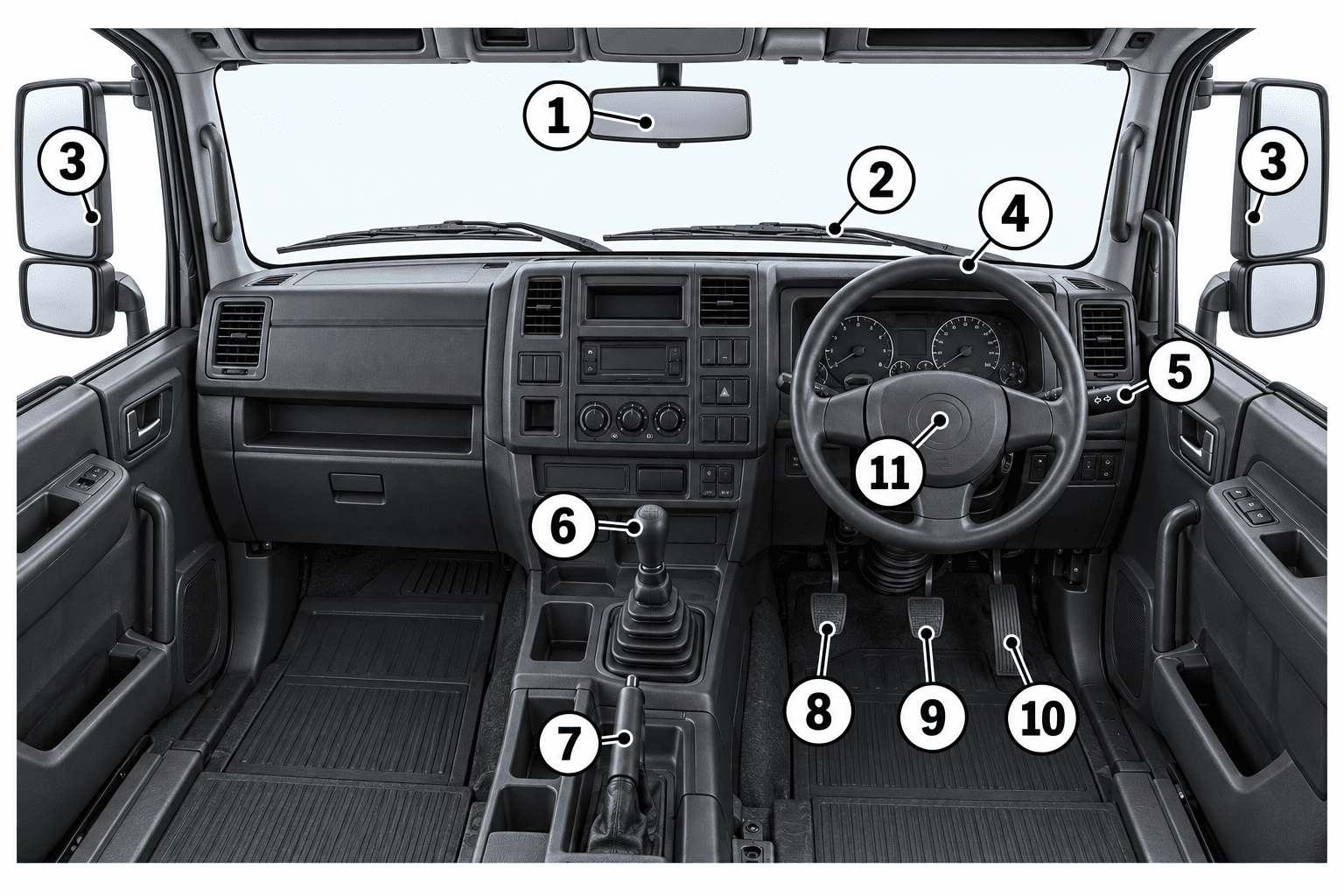
- The steering wheel
- The gear lever
- The parking brake
Answer key: The steering wheel
Explanation
The steering wheel controls direction. The gear lever selects gears and the parking brake secures the stationary vehicle.
Read the lesson9. Which pedal is on the left in the illustrated manual heavy-vehicle layout?
Applies to Code 3
- The service brake
- The clutch
- The accelerator
Answer key: The clutch
Explanation
The pictured manual layout places the clutch on the left. Do not assume an automatic vehicle has the same pedals.
Read the lesson10. Before moving the pictured heavy vehicle, what do rear-view mirrors help you check?
Applies to Code 3
- The fuel quantity
- The engine speed
- Traffic behind the vehicle
Answer key: Traffic behind the vehicle
Explanation
Rear-view mirrors provide information about traffic behind. They do not remove blind areas, so the required additional observation remains necessary.
Read the lesson11. Which control does the manual say works differently in an automatic heavy vehicle?
Applies to Code 3
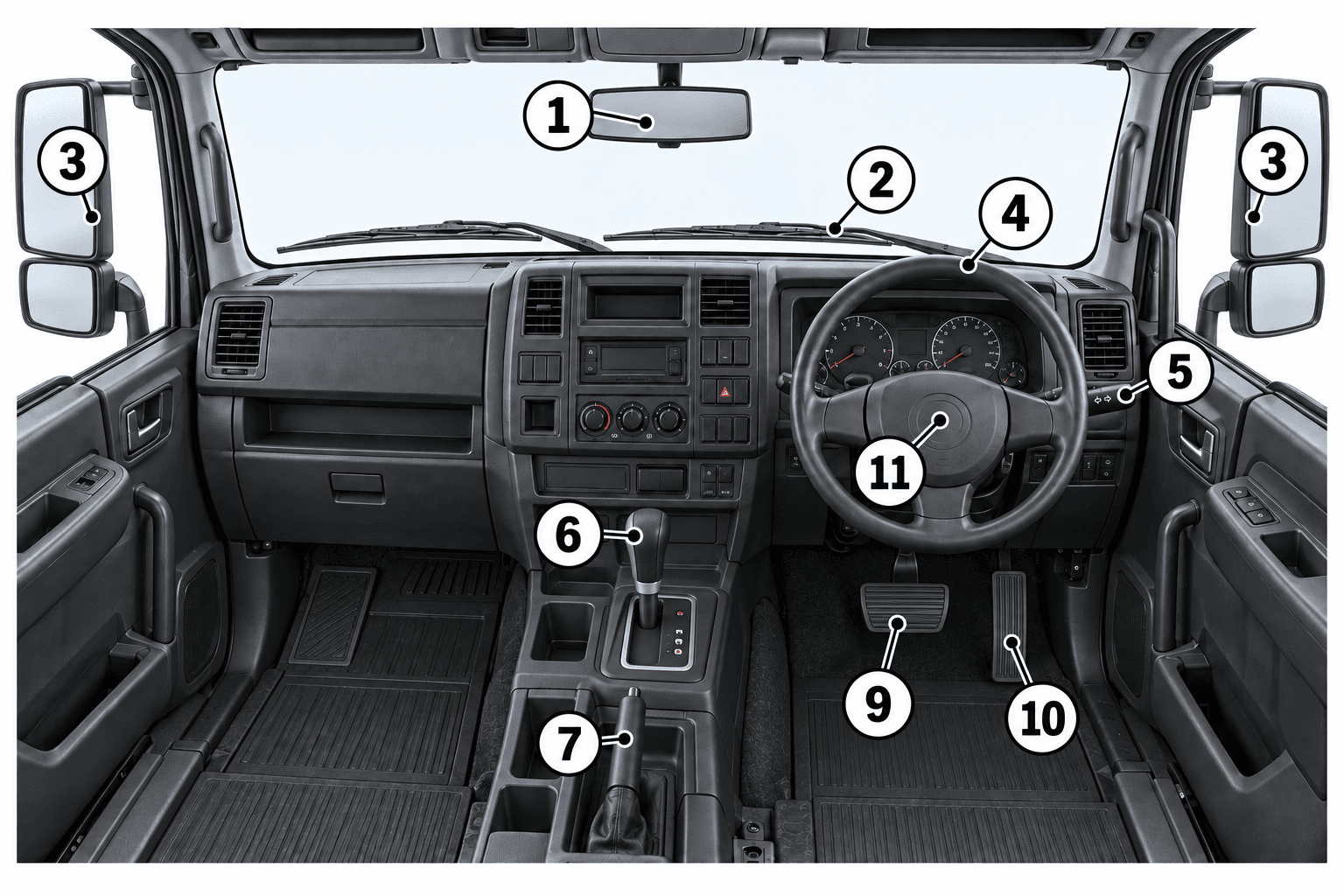
- The gear selector
- The horn
- The rear-view mirrors
Answer key: The gear selector
Explanation
The automatic selector differs from a manual gear lever. Learn the actual selector before use rather than copying a manual gear-change sequence.
Read the lesson