
In this lesson
A stop is a complete stop
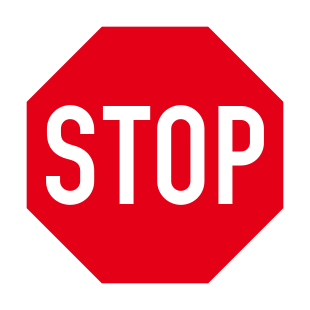
At a STOP sign, stop behind the stop line. If there is no line, stop with the front of the vehicle in line with the sign. Look for pedestrians, cyclists and traffic from every conflicting direction; move only when you can do so safely.
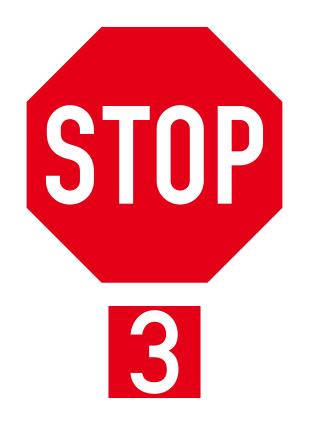
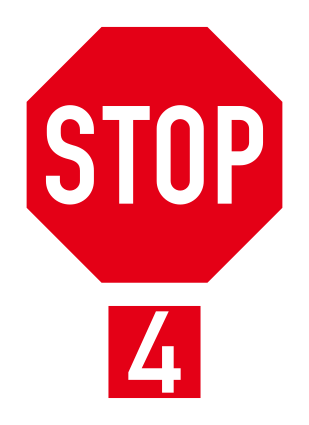
At three- and four-way stops, vehicles that stopped before you move before you. Do not follow the vehicle ahead straight through without making your own stop. If movements conflict or arrival order is uncertain, communicate cautiously and wait for a safe gap.
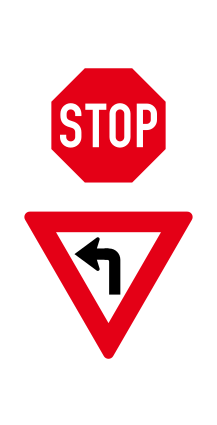
The STOP/YIELD combination treats the left turn differently from the through movement: through traffic stops, while a left turn yields to conflicting traffic. At the STOP/RY-GO roadworks control, obey the face displayed to you and do not anticipate its change.
When must you stop at a yield sign?
At a yield sign, reduce speed and yield to traffic on the road you are entering or crossing. A yield sign is not permission to enter whenever your wheels are moving. Stop if that is necessary to avoid interfering with traffic that has priority.
The yield-to-pedestrians sign requires you to let pedestrians cross. At a mini-circle, yield to a vehicle that will cross its yield line before you cross yours and whose path will cross yours. Stop if necessary, travel clockwise and avoid driving over the central mini-circle. Signal your intended turn in good time. At an ordinary roundabout, give way to traffic approaching from the right unless a sign or officer directs otherwise; do not apply the mini-circle arrival rule to every roundabout.
- At a narrow section with a give-way-to-oncoming-traffic sign, yield to oncoming traffic before entering; do not squeeze through beside it.
- In a pedestrian-priority area, drive slowly enough to yield to pedestrians using the area. The sign does not merely warn that pedestrians might be nearby.
No entry and one-way roads
A no-entry sign prohibits entry from the side facing the sign. Do not treat an apparently empty road as an exception. One-way signs show the direction in which traffic must travel on that roadway.
Before turning onto a one-way road, confirm the arrow direction, choose the correct lane and look for pedestrians and cyclists. A one-way sign on the cross street does not itself give you priority to turn into it.